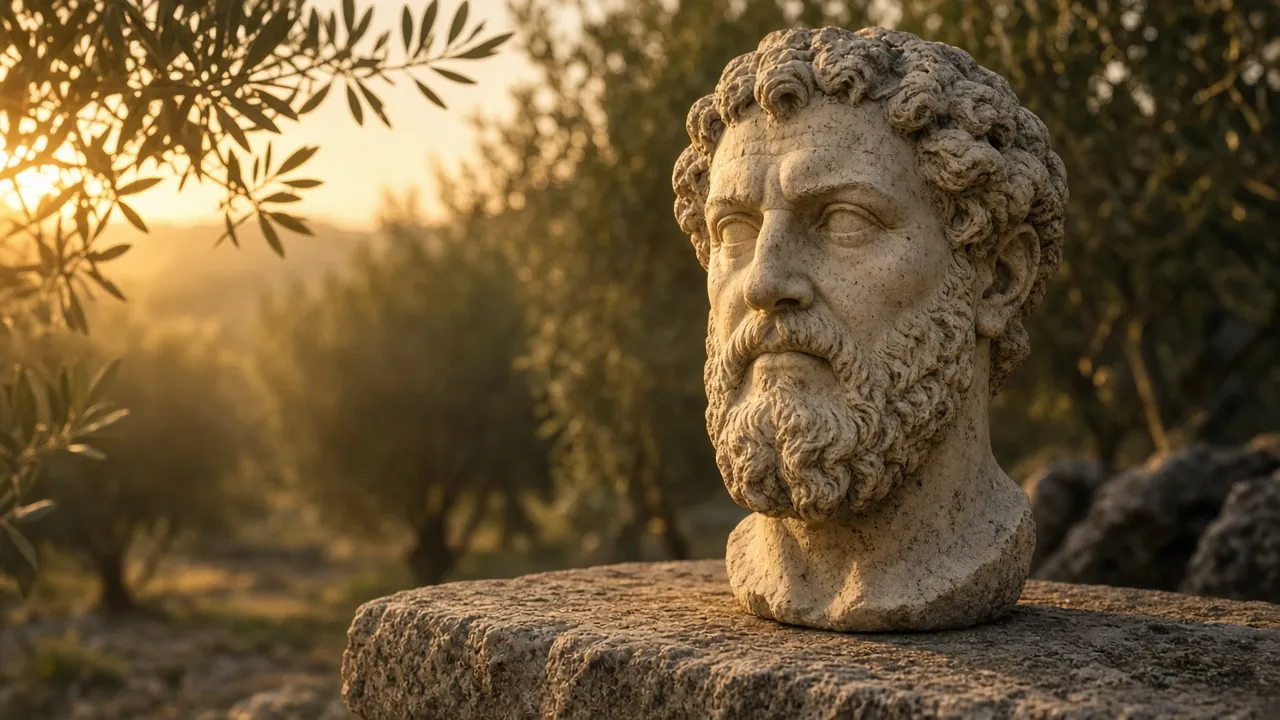
Ten well-known lines from Marcus Aurelius, Seneca and Epictetus, with a plain-English explanation of each and how to use it today.
Stoic quotes are everywhere online, often stripped of context. Here are ten genuine, widely quoted lines from the three best-known Roman-era Stoics, with what they mean in practice. Wording varies between translations.
Epictetus
- "Some things are within our power, while others are not." The opening idea of the Enchiridion. Put your effort into your own judgements and actions; accept the rest.
- "It is not things that disturb us, but our judgements about things." An event is neutral until we label it a disaster. Change the judgement and the distress often eases.
- "First say to yourself what you would be; and then do what you have to do." Decide your character first, then let it guide your actions.
Seneca
- "We suffer more often in imagination than in reality." From the Letters. Most of what we dread never happens, or is milder than we feared.
- "It is not that we have a short time to live, but that we waste a lot of it." From On the Shortness of Life. Time is the one thing you cannot get back.
- "Luck is what happens when preparation meets opportunity." Often attributed to Seneca, though the exact wording is modern. Treat it as a paraphrase.
- "While we wait for life, life passes." Do not postpone living until conditions are perfect.
Marcus Aurelius
- "You have power over your mind, not outside events. Realise this, and you will find strength." A popular paraphrase of the Meditations rather than a literal line, but faithful to its spirit.
- "The impediment to action advances action. What stands in the way becomes the way." Obstacles can become the work itself.
- "Waste no more time arguing about what a good man should be. Be one." Philosophy is for living, not debating.
Using them well
Pick one line a week and apply it to a real situation, such as a delayed train or a difficult email. Stoicism was always meant to be practised, not just quoted.
How do you spot a fake Stoic quote?
Many lines shared online as Stoic aren't in the ancient texts at all. Warning signs:
- Modern vocabulary or business language, such as "mindset", "hustle" or "success".
- No source given: genuine quotes can usually be traced to a book and section, such as Meditations 4.3 or Letter 13.
- Too neat: ancient writing is often longer and more qualified than a slogan.
To check, search a free translation on Project Gutenberg or Wikisource for a key phrase. Bear in mind wording varies between translations, so search a distinctive word rather than the whole line.
Where these quotes come from?
- Epictetus: the Enchiridion (Handbook) and the Discourses, both recorded by his student Arrian.
- Seneca: the Letters to Lucilius and essays such as On the Shortness of Life.
- Marcus Aurelius: the Meditations, his private notes, divided into 12 books.
Reading in context
Quotes are a doorway, not a destination. "What stands in the way becomes the way", for instance, comes from a passage in Meditations Book 5 about working with difficult people: our duty to them remains, and obstacles to one action become opportunities for another virtue, such as patience. Reading the surrounding paragraph almost always deepens the meaning.
Turning a quote into practice
- Choose one quote on Monday.
- Write it where you'll see it: a sticky note, phone wallpaper or the first page of a notebook.
- Each evening, note one moment when it applied, or could have.
- At the end of the week, write in your own words what it means to you.
Over a few months, you'll build a small personal handbook, which is roughly what Marcus Aurelius's Meditations was.
Sources and further reading
- Epictetus, Enchiridion (Project Gutenberg)
- Marcus Aurelius, Meditations (Wikisource)
- Seneca, Moral Letters to Lucilius (Wikisource)
- Seneca, On the Shortness of Life (Wikisource)
- Project Gutenberg: Meditations (George Long translation)
Facts checked on 20 October 2026. Spotted an error? Tell us and we will correct it.
Frequently asked questions
What should you know about Using them well?
Pick one line a week and apply it to a real situation, such as a delayed train or a difficult email. Stoicism was always meant to be practised, not just quoted.
How do you spot a fake Stoic quote?
Many lines shared online as Stoic aren't in the ancient texts at all.
What should you know about Reading in context?
Quotes are a doorway, not a destination. "What stands in the way becomes the way", for instance, comes from a passage in Meditations Book 5 about working with difficult people: our duty to them remains, and obstacles to one action become opportunities for another virtue, such as patience.
What should you know about Turning a quote into practice?
Over a few months, you'll build a small personal handbook, which is roughly what Marcus Aurelius's Meditations was.